


Rod Steiger - Memoirs Of A Friendship
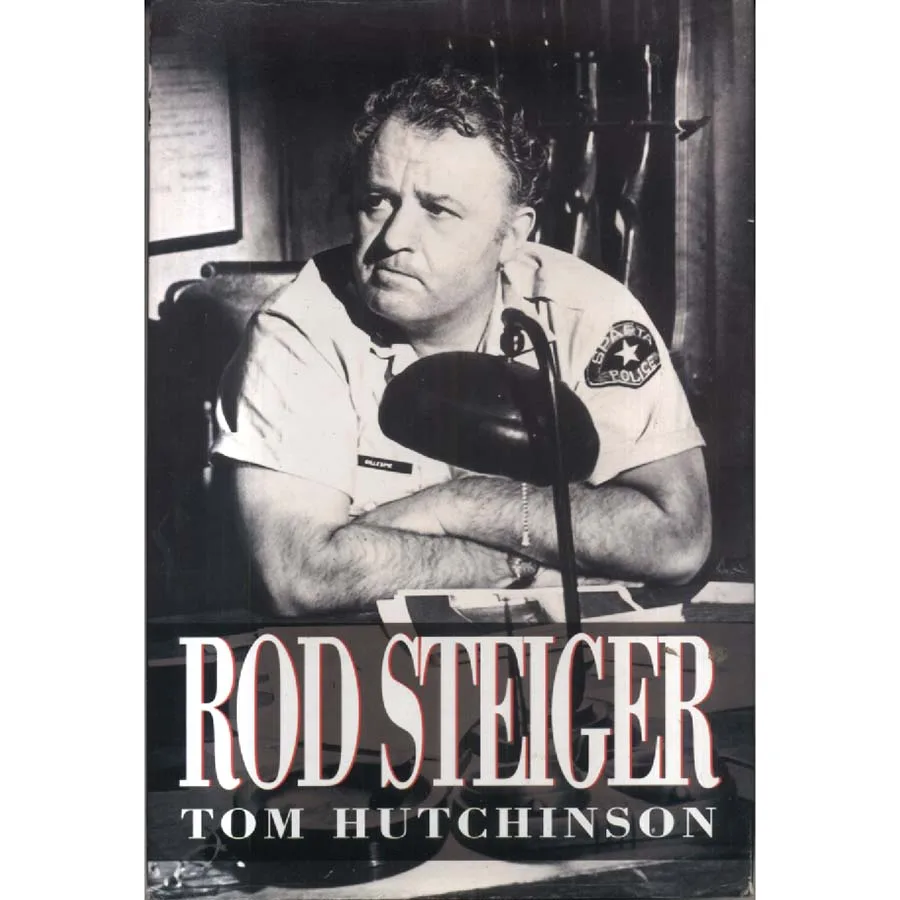
Publisher: Victor Gollancz
Format: Hardback
ISBN: 9780575059030
Rod Steiger was not an actor noted for strolling casually through a role. He entered characters as though breaking into a burning building, dragged their deepest psychological wounds into the light and then demanded that the camera keep rolling until somebody achieved emotional truth. In Rod Steiger: Memoirs of a Friendship, film critic Tom Hutchinson remembers the man behind this formidable intensity—and occasionally behind an even more formidable lunch.
This is neither a remote academic study nor a celebrity biography assembled from press cuttings after one brief encounter in a hotel foyer. Hutchinson knew Steiger for some thirty years, giving him access to the actor’s conversation, opinions, vulnerabilities, enthusiasms and notoriously uncompromising personality. The result is a personal portrait shaped by friendship rather than reverence, although affection is plainly present throughout.
Steiger’s early life provided ample material for the Method. Raised in New Jersey by an alcoholic mother, he endured a troubled childhood, left home and joined the United States Navy while still underage, serving during the Second World War. He subsequently studied acting and emerged during the celebrated era of live American television, when a performer could become famous by acting superbly before the equipment overheated.
His breakthrough came as the lonely butcher in Paddy Chayefsky’s television production of Marty. Steiger declined to sign the long-term contract demanded for the film version, allowing Ernest Borgnine to inherit both the role and an Academy Award. It was an admirably principled decision of the kind that becomes easier to discuss philosophically after several decades have passed.
Hollywood nevertheless found abundant use for him. In On the Waterfront he became Marlon Brando’s compromised brother Charley, sharing the famous taxi scene in which disappointment, corruption and brotherly love occupy the back seat together. In The Pawnbroker he delivered what he considered his finest performance, portraying a Holocaust survivor whose emotional life has been sealed behind years of trauma.
He was Police Chief Bill Gillespie opposite Sidney Poitier in In the Heat of the Night, winning the Academy Award for Best Actor and demonstrating how racism, pride and reluctant respect could all simmer beneath one damp Southern shirt. He also appeared as Komarovsky in Doctor Zhivago, Napoleon in Waterloo, Al Capone, W. C. Fields, Pontius Pilate and Mussolini, because ordinary characters apparently lacked sufficient acreage for his talent.
Hutchinson considers both the triumphs and the less triumphant entries in Steiger’s enormous filmography. Like many powerful character actors, Steiger was offered masterpieces, mediocrities and scripts that presumably looked better before everyone arrived on set. His commitment remained considerable even when the surrounding film had quietly abandoned hope.
The book also explores Steiger’s association with Method acting, his determination to uncover a character’s inner truth and his reputation for emotional force. Admirers called him passionate and dynamic; critics sometimes called him excessive. Steiger’s performances could indeed be large, but then he played men carrying guilt, rage, ambition and several collapsed civilisations within them. Underplaying Mussolini would merely look inattentive.
Yet Hutchinson’s Steiger is more than the booming, sweating intensity familiar from the screen. He is intelligent, funny, candid, difficult, vulnerable and deeply serious about his work. One anecdote even finds him using the word “bloody” while speaking to Queen Elizabeth II, proving that his commitment to realism did not necessarily stop when the scene ended.
The volume includes a selection of Steiger’s own poetry and a National Film Theatre interview conducted before an appreciative audience. These additions allow his voice to emerge directly, beyond Hutchinson’s recollections and the succession of famous performances. They also confirm that Rod Steiger approached self-expression in much the same way he approached acting: wholeheartedly and without worrying whether the furniture might survive.
Published by Victor Gollancz in 1998, this is an engaging mixture of biography, film history, critical appreciation and personal reminiscence. It will appeal to admirers of classic cinema, Method acting and actors from an era when screen presence was achieved without a superhero costume or six months of digitally manufactured abdominal muscles.
This copy is in Good condition, although it is otherwise close to Very Good. There is a small snag to the page edges, apparently caused by something being pressed into them. It is noticeable when examining the closed book but not significant, does not affect the text and has failed to develop into the sort of emotional crisis Steiger would have required fifteen minutes and a close-up to portray.
From Crappy Old Books—where every minor page-edge imperfection is carefully examined, psychologically motivated and finally released with Oscar-worthy intensity.
Keep browsing: See more Biography books Other books by Tom Hutchinson
